A FoundationAI impact story, in partnership with DL Germany
Climate-Resilient Roofing for Hot Cities: Accra and Addis Ababa
3D assembly plans
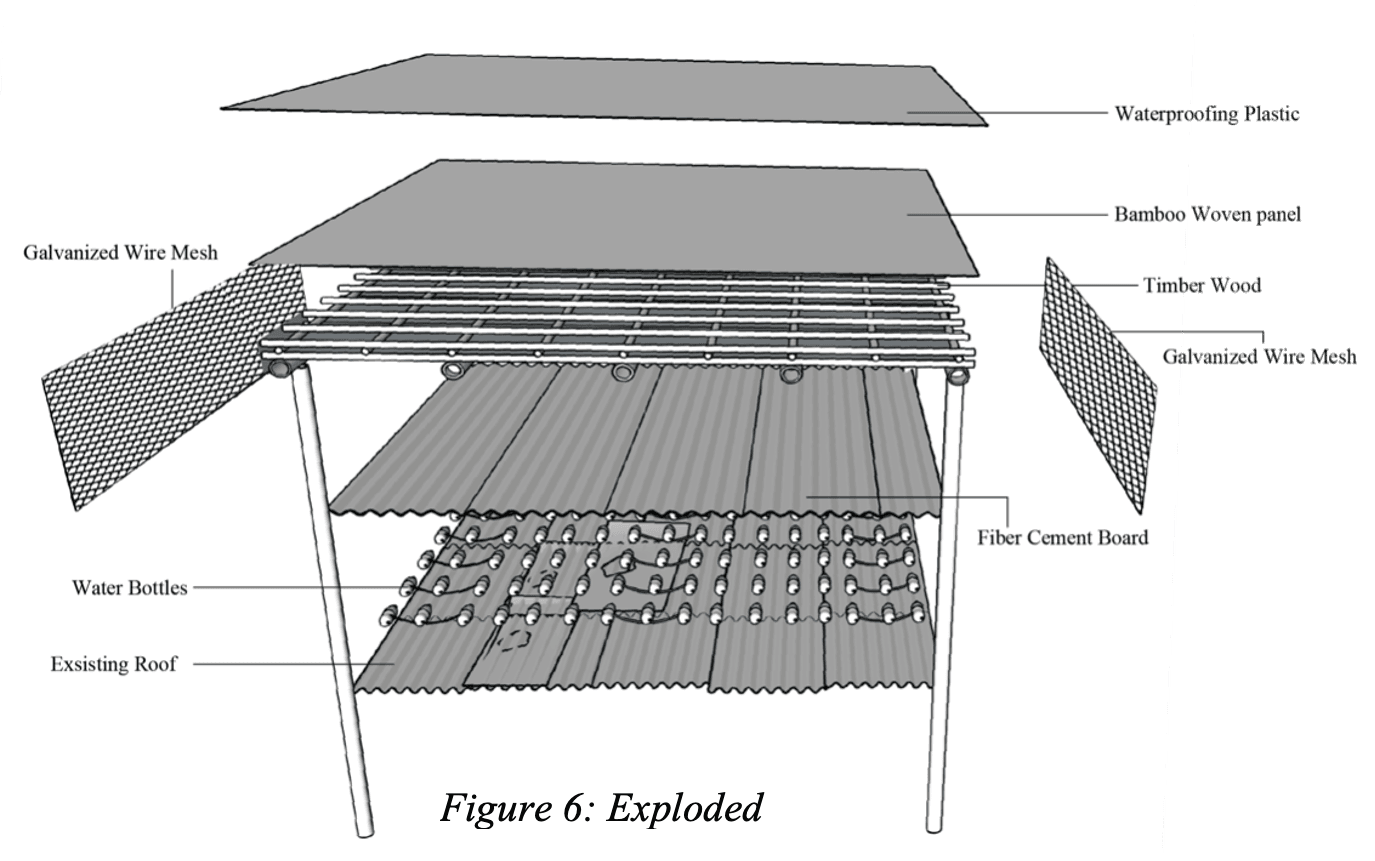
Alternative 1 — exploded layered roof
Use arrow keys or buttons to browse
As heat waves intensify, roofs are one of the fastest levers to protect people indoors, especially where informal construction and limited insulation trap daytime heat. FoundationAI worked with our partner DL Germany on a Stage 2 program to rethink roofing as a measurable climate adaptation intervention, not only as a building product.
The work spans Accra and Addis Ababa because performance and cost drivers differ by climate, supply chain, and local build practice. For each city we supported evidence packages that combine thermal performance analysis with field-oriented costing and implementation guidance, so decision-makers can see both the physics and what it takes to deploy at neighborhood scale.
DL Germany produced city-specific manuals and technical guidelines that translate analysis into repeatable assembly steps, field costing, and thermal documentation. The goal is straightforward: make resilient roof upgrades legible to engineers, contractors, and programs that must justify spend against comfort and safety outcomes.
This use case sits at the intersection of geospatial climate intelligence and built-environment adaptation. Satellite and geospatial context help situate heat risk and urban form; paired with on-the-ground build logic, teams can prioritize where roof retrofits matter most and what performance claims can be defended with data.
The accompanying video walkthrough presents the program and outcomes in a form stakeholders can absorb quickly, whether they are city teams, housing programs, or partners scaling similar approaches elsewhere.